


The mental load is the planning and tracking that happens before anything gets done: noticing the milk is low, remembering the dentist appointment, knowing which kid has outgrown their shoes and when the school form is due. It's invisible, it never really ends, and it's often carried mostly by one person. For a lot of moms, the mental load is heavier than the tasks themselves, because you can hand off a chore and still be the one who has to remember it needs doing.
- 8 Ways to Share the Mental Load Moms Carry
- 1. Use a Shared Digital Calendar
- 2. Write Down How Your Household Works
- 3. Split by Ownership, Not by Task
- 4. Hold a Short Weekly Check-In
- 5. Lower the Standards You Set for Yourself
- 6. Delegate Fully, Not Just the Doing
- 7. Outsource What You Can Afford To
- 8. Name It Out Loud
- A 15-Minute Mental Load Audit
- A System Problem, Not a Willpower Problem
Acknowledging that it's hard is a start, but it doesn't take anything off your plate. Here are eight practical ways to share it, each with a realistic first step. If you're a single parent, or you share parenting across two homes, most of these still work with a co-parent, older kids, family or friends.
8 Ways to Share the Mental Load Moms Carry
1. Use a Shared Digital Calendar
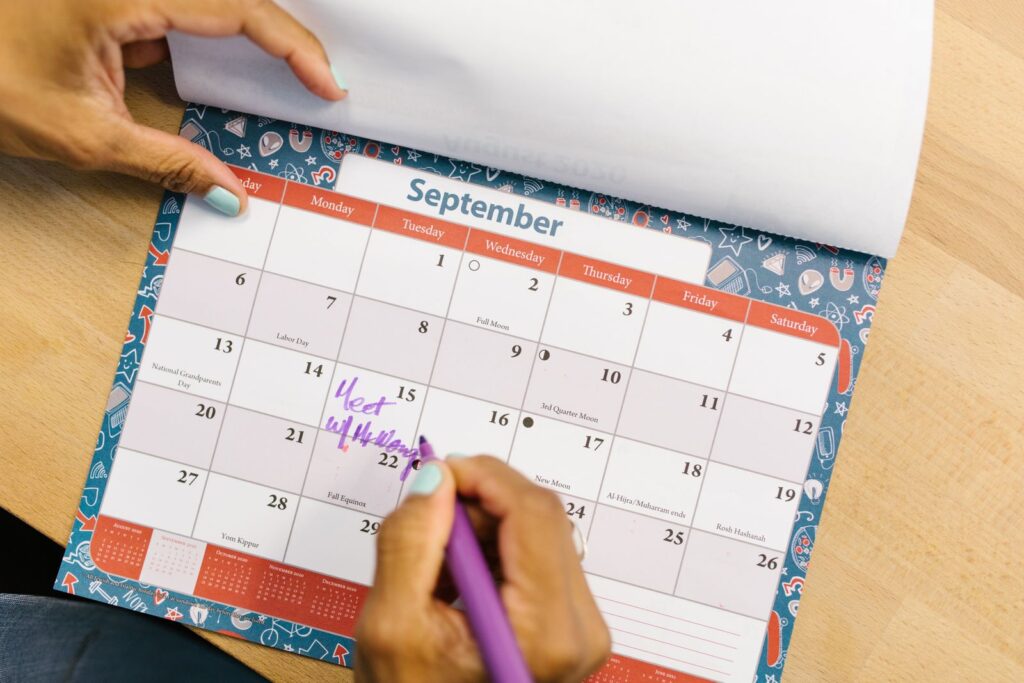
A calendar that only you can see means you're the only one who knows what's happening. Moving appointments, school events, birthdays and activities into a shared digital calendar makes that information available to everyone who needs it, whether that's a partner, a co-parent, grandparents or a teenager. Google Calendar and Apple Calendar both let you share calendars, and family organizer apps like Cozi combine a calendar with shopping lists and to-dos. In practice, it looks like the other adults adding their own events and checking the calendar without asking you first. First step: create one shared calendar, add the next two weeks, and send the invites tonight.
2. Write Down How Your Household Works
A lot of the mental load lives in one person's head: which diaper size you're on, what's allowed in lunch boxes, the pediatrician's number, when the car insurance renews. Writing it down turns private knowledge into shared information. A simple shared document or phone note can hold routines, contacts, clothing sizes, go-to meals and what to do on a sick day. In practice, anyone covering for you, whether a partner, grandparent or babysitter, checks the document instead of texting you with questions. It also makes it far easier to hand over whole areas later. First step: start a note called "How our house runs" and add the five things you're asked about most.

3. Split by Ownership, Not by Task
There's a big difference between doing a task when asked and owning an area. If one person helps with dinner by cooking whatever they're told, someone else is still planning the meals, checking the fridge and writing the list. Owning an area means handling the whole thing, from noticing to planning to doing. Areas might include meals, laundry, school communication, medical appointments, birthday parties or the car. The Fair Play system by Eve Rodsky is built around exactly this idea, with each area described on a card. In practice, the person who owns school communication reads the emails and puts dates in the calendar. First step: pick one area you manage now and agree who will own it, start to finish, for the next month.
4. Hold a Short Weekly Check-In
A ten- or fifteen-minute conversation once a week, perhaps on Sunday evening, can replace dozens of scattered reminders. Go through the week ahead together: appointments, who's doing which pickups, what needs buying, and anything coming up in the next few weeks. In practice, you sit down with the calendar open, agree who's handling what, and then stop carrying it all in your head. Keep it practical and brief so it doesn't turn into a meeting everyone dreads, and try not to use it to settle old arguments. Solo parents can do a version with older kids, a co-parent or a friend who helps out. First step: put a recurring ten-minute check-in on the calendar this week.

5. Lower the Standards You Set for Yourself
Part of the mental load comes from expectations that don't have to be there: homemade birthday treats, coordinated outfits, a reply to every message in the class group chat. Ask whether each item really needs to happen, or needs to happen your way. Store-bought is fine. Leftovers count as dinner. A quick thank-you message works as well as a card. In practice, this means a shorter list and less to keep track of. It isn't about caring less, just about spending your attention on the things that matter most to you and your family. First step: pick one recurring task this week and decide to do a simpler version of it, or to skip it entirely.
6. Delegate Fully, Not Just the Doing
Handing someone a task and then reminding them, checking on them and redoing it keeps the mental load with you. Delegating fully means letting the other person own the result, including doing it differently from how you would. If a partner takes over school lunches, they decide what goes in, they notice when the bread runs out, and they put it on the list. In practice, it means resisting the urge to step in unless something is actually unsafe. With older kids, it can mean giving them full responsibility for packing their own school bag or sports kit. First step: hand over one task completely, and agree not to remind or correct for two weeks.

7. Outsource What You Can Afford To
Paying for help isn't possible for everyone, but where there's room in the budget, outsourcing a few jobs can take them off your mind entirely. Options include grocery delivery or pickup, a meal kit a couple of nights a week, a cleaner once a month, a sitter found through a service like Care.com, or help with odd jobs through Taskrabbit. There are free versions too: a babysitting swap with another family, a rotating meal share with neighbors, or grandparents taking one regular afternoon. In practice, it means fewer recurring jobs to track. First step: list your three least favorite recurring tasks and check whether any of them could be outsourced, swapped or shared cheaply.
8. Name It Out Loud
In many households, the person not carrying the mental load simply doesn't see it, because it's invisible by nature. Putting it into words can change that. Instead of "I do everything," try describing specifics: "I keep track of the kids' appointments, their clothing sizes and what we need from the store." Some people write down everything they track for a week and share the list, which often surprises both people. In practice, this works best as a calm conversation at a good time, not in the middle of a stressful evening. If you're parenting solo, naming it can still help you ask family or friends for specific help. First step: write down what you track in one normal day.
A 15-Minute Mental Load Audit
If you're not sure where to start, a quick audit can show you where the load actually sits. Grab a notebook or open a shared note, set a timer for fifteen minutes, and work through these questions, alone or with whoever shares your household:
- What did I remember, plan or keep track of this week that nobody asked me to?
- Which of those things does only one person know how to do?
- What do I get asked about most often?
- Which recurring job do I dread most, and why?
- What could stop happening entirely without anyone noticing?
Circle two or three items that come up more than once. Those are the best candidates for a shared calendar, a written routine, or a full handover to someone else. Keep the list, because repeating the audit in a month or two shows what's shifted and what has quietly drifted back to you.
A System Problem, Not a Willpower Problem
If you feel like you're dropping balls or forgetting things, it isn't because you're not organized enough or not trying hard enough. The mental load grows when one person's head is the only place the information lives. The fix isn't more willpower. It's a better system: shared calendars, written routines, clear ownership and regular check-ins. Start with one change from this list, give it a few weeks, and adjust as you go. Every household is different, and the right split looks different for couples, co-parents, single parents and multigenerational families. The goal is simply that you're not the only one holding it all.