



Some links in this article may be affiliate links, which means we may earn a commission at no extra cost to you.
- Screen-Free Entertainment for Kids: 9 Types Worth Trying
- 1. Card-Based Audio Players
- 2. Figure-Based Story Speakers
- 3. Audiobooks from the Library and Subscriptions
- 4. Kids' Story and Science Podcasts
- 5. Volume-Limited Kids' Headphones
- 6. Picture Books and Early Graphic Novels
- 7. Card Games for Kids
- 8. Magnetic Building Tiles
- 9. Jigsaw Puzzles
- Making the Switch Without a Battle
- Quick Comparison: Three Popular Options
- Build a Small Screen-Free Quiet Time Kit
Most parents aren't trying to ban screens. We'd just like one car ride, one rainy afternoon or one pre-dinner hour that doesn't end in a negotiation over "just one more episode." Good screen-free entertainment for kids doesn't feel like a punishment. It gives them something genuinely absorbing to do with their ears, hands or imagination. Here are nine kinds that work, plus the catch with each.
Screen-Free Entertainment for Kids: 9 Types Worth Trying
1. Card-Based Audio Players
A card-based audio player is a small speaker that plays a story, song collection or podcast when a child slots in a physical card. There's no screen, no scrolling and no autoplay into something you didn't choose. They suit roughly ages 3 to 10, and younger kids love the independence of picking their own card. Many parents use one for quiet time and bedtime stories, and some players double as a night light and clock. Parents can often record or add their own audio too. The main drawback is cost: the player is only the start, and card libraries add up fast. Yoto is the best-known example, with a smaller portable version for travel.
2. Figure-Based Story Speakers
Story speakers work like card players, but the audio is triggered by placing a small collectible figure on top of a soft, cube-shaped speaker. The figures themselves are part of the fun, and preschoolers often line them up and play with them even when the speaker is off. They're best for ages 3 to 7. Kids use them for stories and songs during quiet time and wind-down, and the soft build survives being dropped. Recordable figures let a grandparent read a story in their own voice. The drawback: figures are collectible by design, so expect requests for "just one more." New figures usually need a Wi-Fi connection the first time. Tonies is the brand most parents mean here.
3. Audiobooks from the Library and Subscriptions
Audiobooks are the cheapest way to fill a long drive, and they work across ages, from picture-book read-alongs for preschoolers to full novels for older kids. Families often listen together in the car, which turns a three-hour drive into a shared story instead of a battle over tablets. Your local library may lend audiobooks free through an app like Libby, so ask about your library card before paying for anything. Paid services such as Audible have bigger catalogues and no waiting lists. The drawback: popular titles at the library can have long holds, and a phone is still needed to play them, so hand it over with the screen locked.
4. Kids' Story and Science Podcasts
Podcasts made for children cover folk tales, science questions, silly stories and history, usually in 15 to 30 minute episodes that fit neatly into a car ride or bath time. They're best for ages 4 to 12, and many are genuinely funny for adults too. Circle Round from WBUR adapts folk tales from around the world, Tinkercast makes science shows like Wow in the World, and Story Pirates turns stories written by kids into comedy sketches. They're free, which is the biggest selling point. The drawback is ads in some shows, and you'll want to preview an episode or two, since "kids' podcast" covers a wide range of tone and age.
5. Volume-Limited Kids' Headphones
Headphones let one child listen to a story while a sibling naps or plays something else, which is often what makes screen-free time possible in a small car. Kids' headphones are smaller, sturdier and usually have a built-in volume limit. They suit ages 3 and up. Look for a clearly stated volume limit, soft ear cushions, a bendable headband that survives being sat on, and a cable or Bluetooth pairing that is simple for kids to manage. For safe listening levels, check a trusted health source such as the NIDCD guide to noise-induced hearing loss rather than relying on packaging. The drawback is that limits vary by device. Puro Sound Labs and BuddyPhones both make volume-limited kids' headphones.

6. Picture Books and Early Graphic Novels
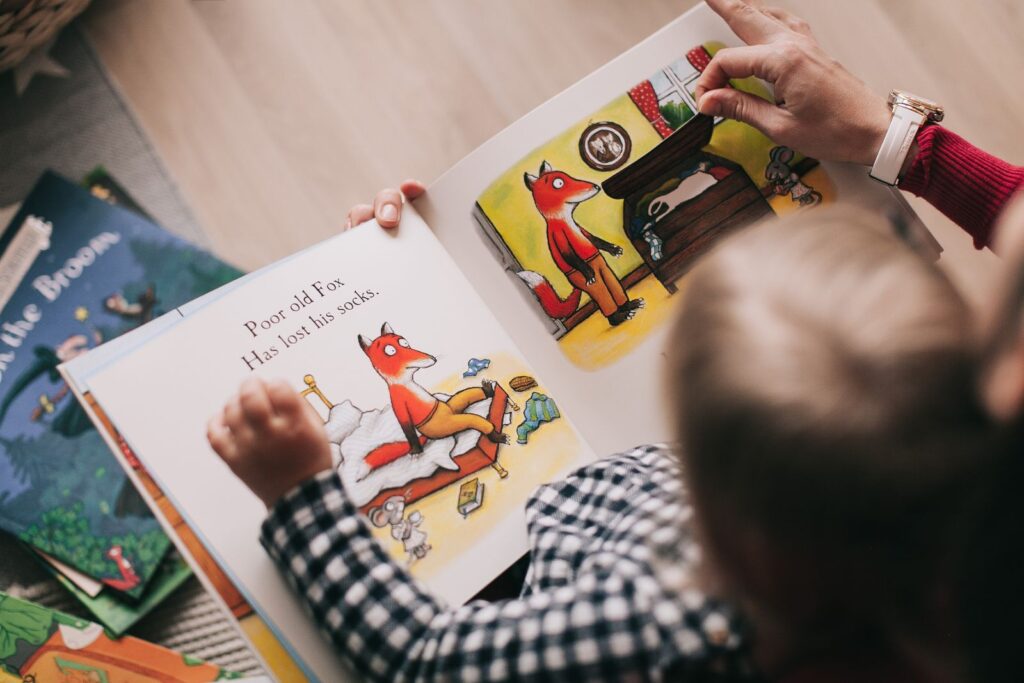
A basket of books by the sofa is still one of the most reliable screen-free options, and not only for kids who can read. Toddlers and preschoolers "read" familiar picture books alone, retelling the story from the pictures. From about 6 or 7, early graphic novels are a great bridge, because the art carries a lot of the story for kids who are still building reading stamina. Rotate books from the library every few weeks so the basket feels new. Kids use them in quiet time, in the car (if they don't get car sick) and in bed. The drawback: a basket of the same ten books quickly gets ignored. Your local library is the budget solution here as well.
7. Card Games for Kids
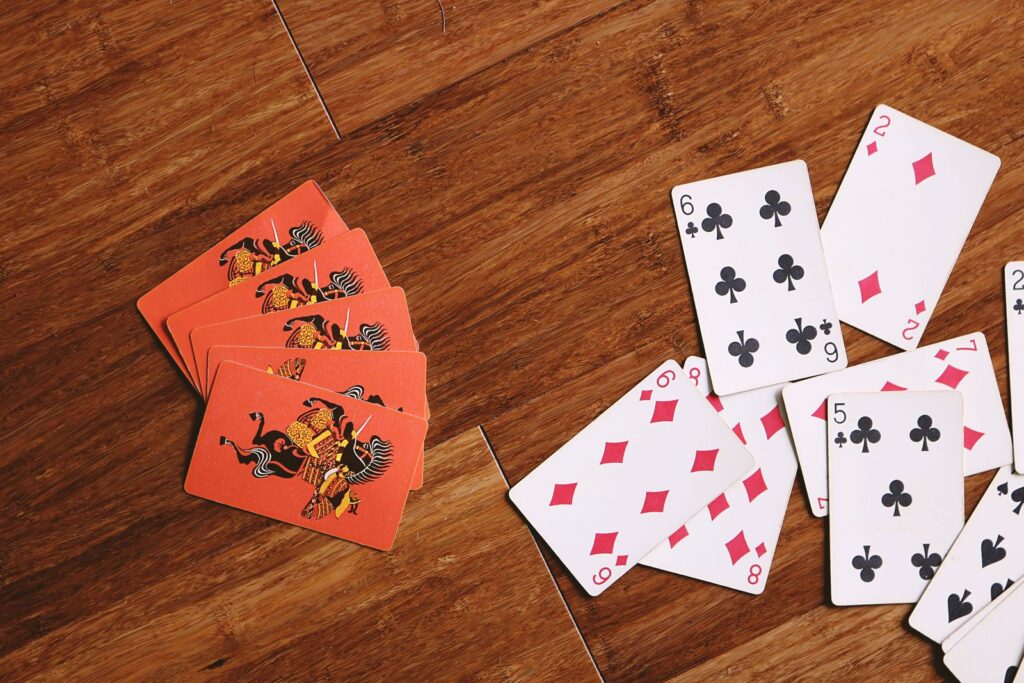
Card games are small, cheap, and surprisingly effective at keeping a whole family at the table for 20 minutes. Simple matching and memory games work from about age 3, while games with a bit of strategy suit ages 6 and up. Cooperative games, where everyone plays against the game rather than each other, are a smart pick for kids who find losing very hard. Kids use them after dinner, in cafés while waiting for food, and on trains. Look for sturdy, thick cards and short rounds. The drawback: a deck of small cards is easy to lose, so keep them in a zip pouch. Most toy shops carry a good selection of family card games.
8. Magnetic Building Tiles
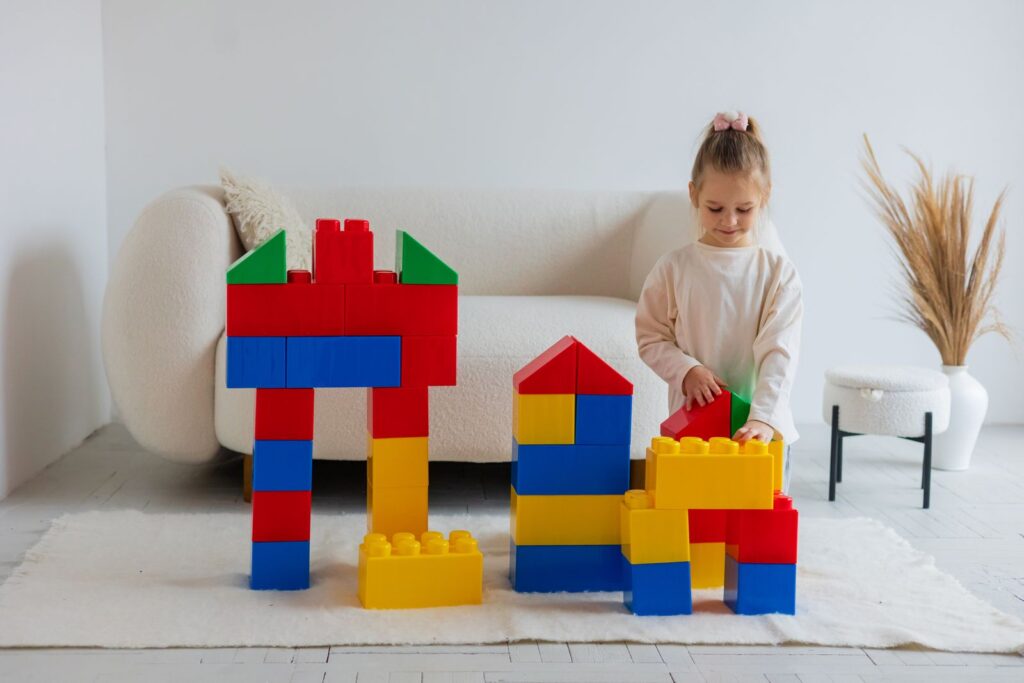
Magnetic tiles are flat plastic shapes with magnets around the edges that snap together into walls, towers, rockets and garages. They're open-ended, so a three-year-old builds flat patterns while an eight-year-old builds a multi-storey car park with a ramp. That wide age range, roughly 3 to 10, is why they often get played with for years. Kids use them on the floor for long stretches of quiet time. Look for strong magnets that are fully enclosed and riveted seams. The drawback is price: a starter set disappears fast once a child wants to build big. Magna-Tiles and PicassoTiles are popular options.
9. Jigsaw Puzzles
Puzzles are a quiet, satisfying activity that can take ten minutes or a whole weekend. Chunky floor puzzles with 12 to 24 large pieces suit ages 3 to 4, and by 6 to 8 many kids can manage 100 to 200 pieces with some help. Kids like doing them alongside an adult, and a half-finished puzzle on a side table draws everyone back to it. Look for thick cardboard pieces that don't bend, a clear picture, and a box that closes properly. The drawback is missing pieces, which can make a puzzle feel pointless, so count them after big sessions if you want to keep it. Ravensburger makes a large range for kids.
Making the Switch Without a Battle
The hardest part of screen-free time is usually the first five minutes, not the activity itself. A few things make that transition smoother. Give a warning before the screen goes off ("two more minutes, then it's story time") rather than switching it off mid-scene. Have the next thing already set up, whether that's a podcast queued in the car or a puzzle half-started on the table, so there's no empty gap to fill with complaints. Join in for the first few minutes, then drift away once they're absorbed. And keep expectations realistic: some days quiet time lasts ten minutes and ends with a fight over the blue magnetic tile. That's still ten minutes. The American Academy of Pediatrics has a free family media use plan tool if you'd like to set screen rules together as a family.
Quick Comparison: Three Popular Options
| Type | Best ages | Cost | Portability |
|---|---|---|---|
| Card-based audio player | About 3 to 10 | Higher up front, plus cards | Good, portable versions exist |
| Card games | About 3 and up | Low | Excellent, fits in a pocket |
| Magnetic building tiles | About 3 to 10 | Medium to high | Poor, best kept at home |
Build a Small Screen-Free Quiet Time Kit
A quiet time kit is simply a box or basket that comes out only at quiet time, so it stays interesting. Start with one audio option (a player, a stack of podcasts or a library audiobook), one hands-on option like magnetic tiles or a puzzle, and a few library books that get swapped every couple of weeks. Add a pair of volume-limited headphones if siblings share the space. Keep it in one place, put it away afterwards, and rotate one item each week. It doesn't need to be expensive. The point is predictability: a kid who knows exactly what quiet time looks like is much less likely to argue about it. For the car, make a smaller version in a tote bag: a downloaded audiobook or two, a pocket card game, headphones for each child, and one small activity book. Leave it in the car between trips so it's always ready, and restock it before any long drive rather than on the morning you leave.